

Enjoying a premium cigar is an experience built on ritual, craftsmanship, and technique. While choosing the right cigar matters, learning how to cut and light it properly is just as important. The way you prepare your cigar directly affects airflow, burn consistency, flavor, and overall enjoyment. With the right tools and a little guidance, you can turn these first moments of a smoke into a smooth, satisfying ritual every time.
Why Proper Cutting and Lighting Matters
Premium cigars are handmade with long-filler tobacco leaves rolled to allow even airflow from foot to cap. A poor cut can lead to unraveling, tight draws, or bitter flavors. Likewise, improper lighting can cause canoeing, tunneling, overheating, or a harsh first third. Mastering these steps protects the craftsmanship of the cigar and ensures you get the full depth of flavor the blender intended.
How to Cut a Cigar Correctly
Choose the Right Cigar Cutter
The cutter you use makes all the difference. The most common options include:
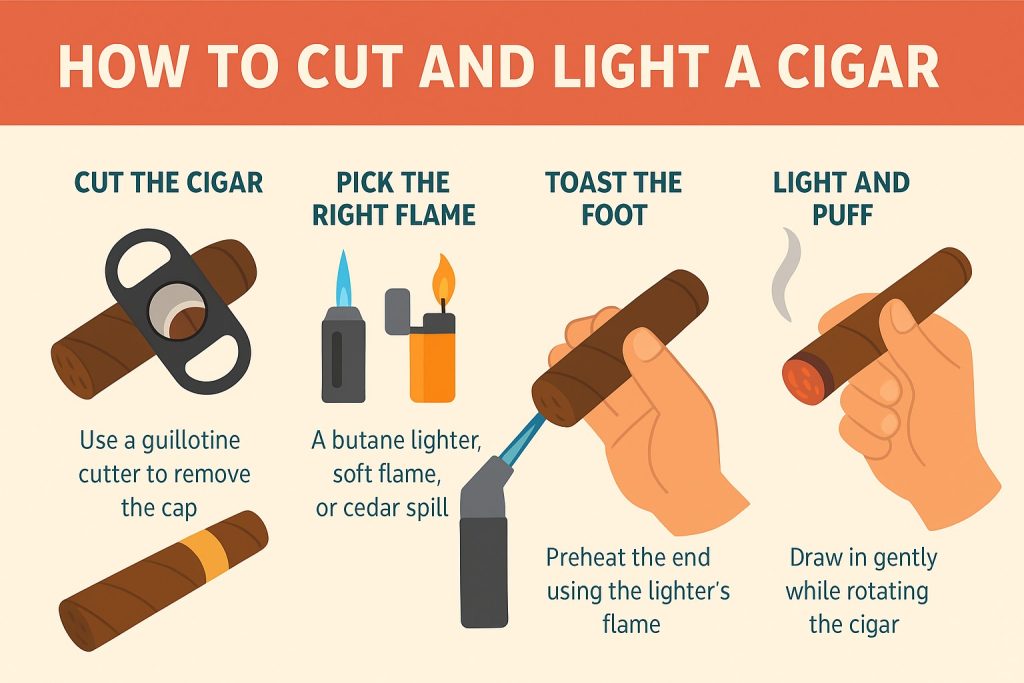
- Straight (Guillotine) Cutter – Clean, precise cut; ideal for most cigars.
- V-Cut (Cat’s Eye) – Creates a channel for concentrated draw.
- Punch Cutter – Best for smaller ring gauges or smokers who prefer a tighter draw.
A sharp, high-quality cutter will avoid crushing the cap and ensure clean edges.
Find the Cap Line
Every premium cigar has a finished cap made of a small piece of wrapper leaf. You should cut just above the shoulder—the point where the curved cap meets the straight body. Cutting too much exposes the wrapper seam, leading to unraveling. Cutting too little restricts airflow.
Make a Quick, Confident Cut
Hold the cigar firmly and make one swift motion with the cutter. A clean slice preserves the structure of the cap and ensures a smooth draw from the first puff.
How to Light a Cigar Properly
Pick the Right Flame Source
For the best flavor, use a clean, odorless flame:
- Butane Torch Lighter – Most reliable for even toasting.
- Soft Flame Lighter – Traditional and gentle.
- Cedar Spill – Adds a classic touch without influencing taste.
Avoid candles, matches with sulfur, or petrol-based lighters, as they can alter the cigar’s flavor.
Toast the Foot First
Before taking a draw, hold the flame close to—but not touching—the foot of the cigar. Rotate slowly as the edges begin to darken. This process warms the tobacco and prepares it for an even burn.
Light with Gentle Puffs
Once the foot glows from toasting, put the cigar to your lips and take slow, steady puffs while rotating the cigar above the flame. You should see an even orange glow forming. Avoid letting the flame touch the wrapper directly, as overheating can scorch the tobacco.
Check for an Even Burn
After lighting, gently blow on the cigar’s foot to confirm a complete cherry. A uniform burn ensures consistent flavor and a cool draw throughout the smoke.
Tips for the Best Smoking Experience
- Store cigars properly in a humidor at 65–70% humidity.
- Do not inhale—let the flavor rest on your palate.
- Avoid rapid puffing, which can cause bitterness.
- If your cigar goes out, simply tap the ash, relight the foot, and continue enjoying.
Final Thoughts
Cutting and lighting a premium cigar is a ritual that sets the tone for the entire smoking experience. With proper tools and a little technique, you can elevate every smoke to its fullest potential. Whether you’re enjoying a mild Dominican classic, a rich Nicaraguan blend, or a rare limited edition, learning these simple steps helps you appreciate your cigar the way the maker intended.
If you’d like this rewritten with a specific keyword focus or formatted for your blog template, I can adjust it further.